
If I’m asked if I would ever return to living in a town, my answer is always an emphatic “no”. Ok, I do miss easy access to a delicious restaurant, but I was born in the countryside, live in the countryside and work in the countryside, and that is for one very good reason… nature is beautiful, and it makes me feel good.
Of course, it’s now scientifically proven that a connection with nature improves our mental and physical health. Research revealed that exposure to a diverse range of natural features reduces stress, mental fatigue, improves cognitive function and even promotes creativity.
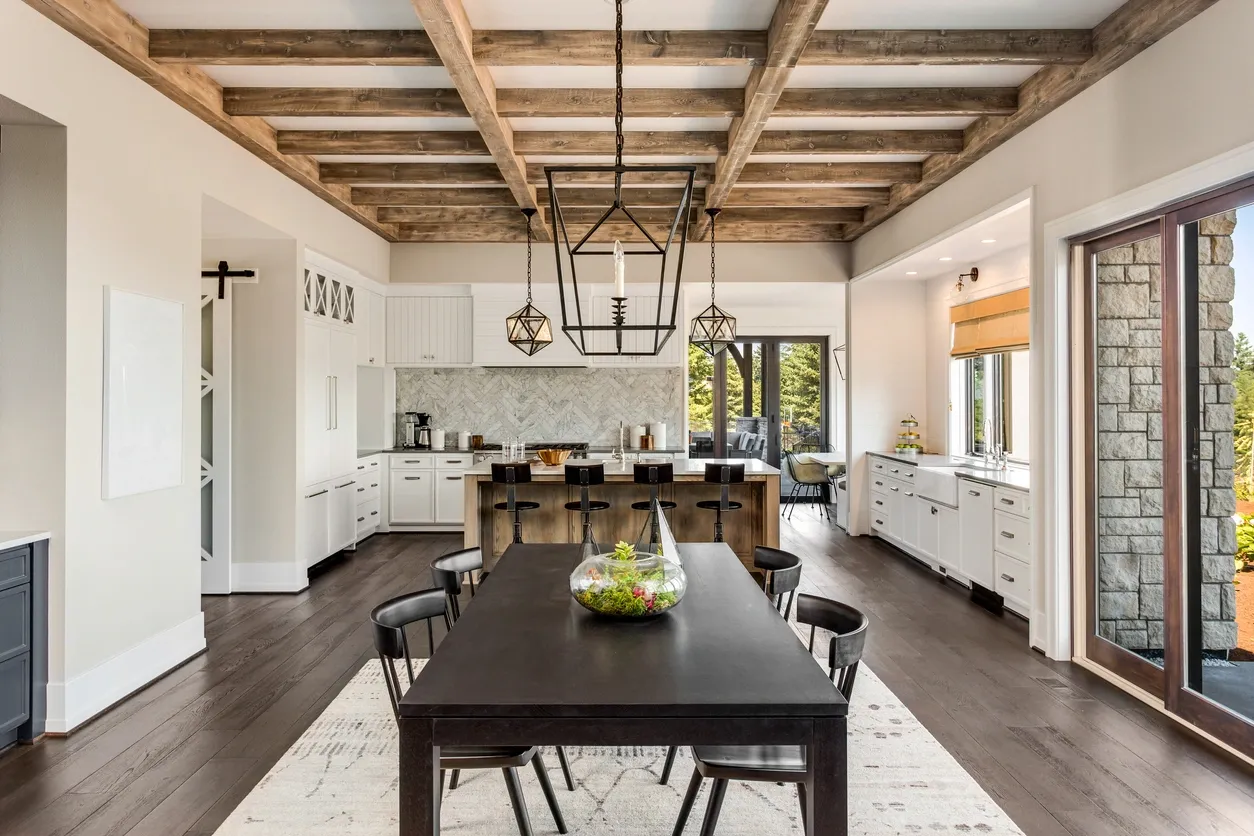
No wonder those long walks around our surrounding countryside, leaves us feeling better, but we don’t need to leave that feeling behind when we step through our front door. Biophilic design (bringing our connection with nature indoors) has rooted itself in modern day architecture and interior design, helping create that same feeling inside. It’s achieved by some simple principles and the use of sustainable materials.
So, where to start? We might be lucky enough to have large windows, countryside views and an abundance of light which is a major plus, but in our pretty villages with old houses, that’s not always a possibility. In which case it’s all about mimicking nature using light, colour, texture and form…
Access to nature
Consider the views you have of the outside, from within your home. A richly planted courtyard, a terrace with a small ornamental tree, shrubs and flowers, or even a window box is a great first step. Scented plants that can waft through open windows (when our weather allows).
Indoor Plants or Flowers
A simple vase of fresh flowers or a few good architectural plants at eye level will also trigger a connection. They’re also perfect at softening a space, adding texture and visual interest.
Colour
There’s such a thing as colour phycology. For example, green induces feelings of tranquillity, harmony and peacefulness, blue… serenity and calm. Colour drenching is popular currently but use with caution… too much of a colour can have negative impacts, it’s all about balance.
Natural Materials
Stone, clay, wood, bamboo, cork (anyone from the 70’s… scratch that orange memory, there’s some beautiful products now), wools, linens, sisal and jute can be used across a variety of surfaces, furniture and accessories. if you’re worried about stain resistance there are some fabulous alternatives made from recycled materials, to shrug off those paw marks.
Pattern
Naturalistic patterns vary hugely from botanicals, birds or animals to complex geometrics and spirals. Use them through wallpapers, rugs, artwork, soft furnishings and accessories.
Whether it’s a quaint country cottage, a grand Georgian house or a bold Scandinavian boat house, there’s a biophilic design just waiting to come in.